

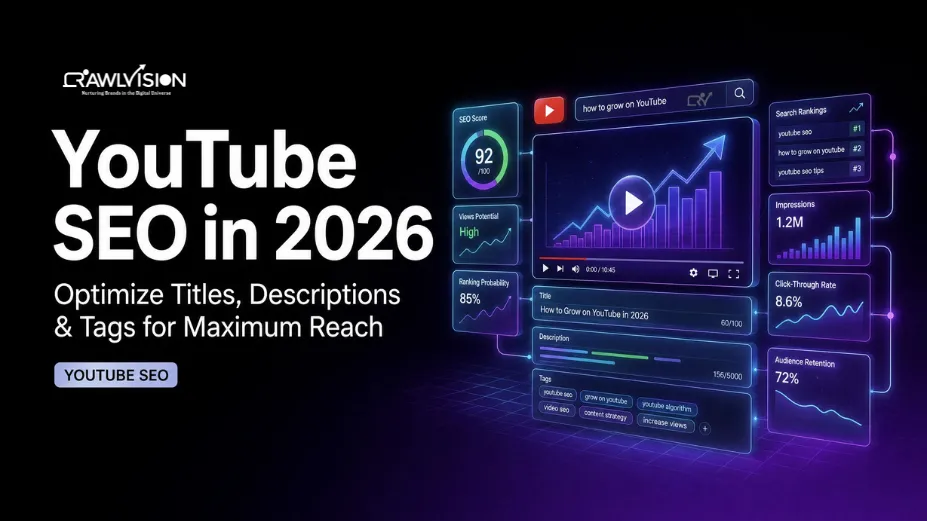
Why youtube SEO in 2026 matters more than ever
In the rapidly evolving digital landscape, YouTube SEO in 2026 has become more sophisticated than ever before. With AI-driven algorithms dominating the platform, simply uploading videos is no longer enough. To achieve maximum reach, creators must strategically optimize their titles, descriptions, and tags while aligning with modern YouTube ranking factors.
Today, YouTube SEO is not just about keywords, it’s about user intent, engagement signals, and content relevance. If done correctly, it can significantly boost your video discoverability, increase your click-through rate on YouTube, and drive massive organic traffic.
How the youtube algorithm works in 2026
Understanding the YouTube algorithm 2026 is the foundation of effective video optimization. The platform now relies heavily on:
- User behavior tracking
- Watch time and retention
- Engagement signals (likes, comments, shares)
- Content relevance and keyword matching
Unlike earlier years, metadata optimization (titles, descriptions, tags) works in combination with viewer satisfaction. This means even if your keywords are perfect, poor engagement can kill your rankings.
Key Insight:
YouTube SEO in 2026 = Keywords + Engagement + Retention
How to optimize video titles for maximum reach
Your title is the first thing users see. A well-optimized title directly impacts your click-through rate YouTube.
Best practices for title optimization
- Use Focus Keyword Early
- Always include YouTube SEO in 2026 or your main keyword at the beginning.
- Create Curiosity + Value
- Example:
Bad: “YouTube SEO Tips”
Good: “YouTube SEO in 2026: 7 Proven Hacks to 10X Your Video Reach”
- Example:
- Keep It Between 50–60 Characters
- This ensures full visibility in search results.
- Use Power Words
- Words like Ultimate, Proven, Secret, Best improve CTR.
- Avoid Clickbait
- Misleading titles reduce watch time, harming rankings.
Pro Tip:
A high-performing title balances keyword optimization + human psychology.
How to write SEO-optimized descriptions
Your description plays a critical role in video descriptions SEO and helps YouTube understand your content.
Structure of a perfect description
1. First 2 lines (most important)
Include your focus keyword naturally:
“In this video, we explain YouTube SEO in 2026 and how to optimize titles, descriptions, and tags for maximum reach.”
2. Keyword-rich paragraph
Use sub keywords and LSI keywords:
- video optimization
- YouTube ranking factors
- video discoverability
3. Add timestamps
Improves user experience and boosts engagement signals
4. Include links & ctas
- Website links
- Social profiles
- Subscribe CTA
5. Use hashtags
Add 3–5 hashtags like:
- #YouTubeSEO
- #VideoMarketing
- #YouTubeGrowth
Pro Tip:
A well-written description increases watch time, which directly improves rankings.
How to use tags for better video ranking
Tags are often underestimated, but they still play a role in YouTube tags strategy.
Types of tags you should use
- Primary Keyword Tag
- YouTube SEO in 2026
- Broad Tags
- YouTube SEO
- video marketing
- Long-Tail Tags
- how to rank YouTube videos 2026
- YouTube SEO tips for beginners
- Competitor Tags
- Use tools to find competitor keywords
Important:
Tags help YouTube understand context but are less powerful than engagement signals.
Advanced youtube SEO strategies for 2026
1. Focus on click-through rate (ctr)
Even the best video optimization fails without clicks.
- Use compelling titles
- Add eye-catching thumbnails
- Test different formats
2. Improve watch time
Watch time is a major YouTube ranking factor.
- Hook viewers in first 10 seconds
- Avoid long intros
- Deliver value quickly
3. Boost engagement signals
Encourage:
- Likes
- Comments
- Shares
These signals directly impact video ranking strategy.
4. Use playlists for SEO
Grouping videos improves:
- Session time
- Content discoverability
5. Optimize for search + suggested videos
Balance:
- Keyword targeting (search)
- Engagement (suggested feed)
Common mistakes to avoid
- Ignoring keyword research
- Writing short or irrelevant descriptions
- Using misleading titles
- Overloading tags with unrelated keywords
- Not focusing on audience retention

